Team development

MR, VR or AR.
Which one is best for you?

There’s a question we’re often asked by customers considering virtual reality (VR), augmented reality (AR) or mixed reality (MR) for their team development. 

Given these terms are often used interchangeably, it’s an understandable point of clarification.

As for the answer, the truth is – it depends. They each have distinct capabilities tailored to different training needs and performance goals.

So, let’s take a closer look at what sets them apart and how to choose the right fit for your team.

Team development

Virtual Reality: Total immersion for total preparation

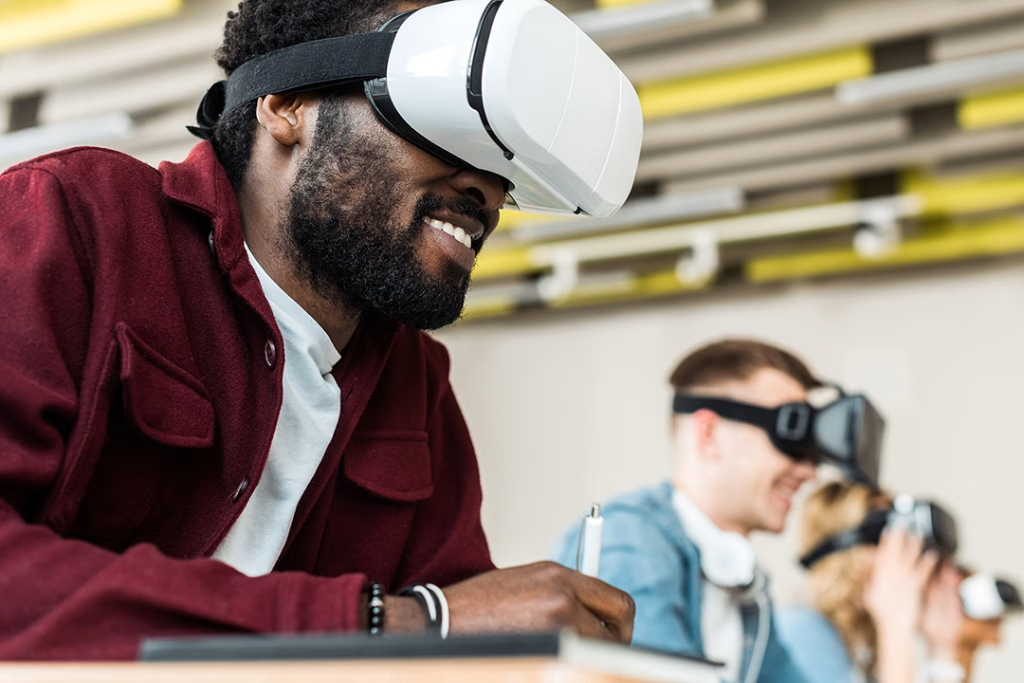
When you choose VR, you choose a fully immersive experience.

Once the headset is on, teams step into expertly recreated, high-fidelity virtual environments where they can rehearse complex operations safely and repeatedly.

And because it’s completely virtual, it’s the ideal solution when training involves risk, remote locations or coordination between teams.

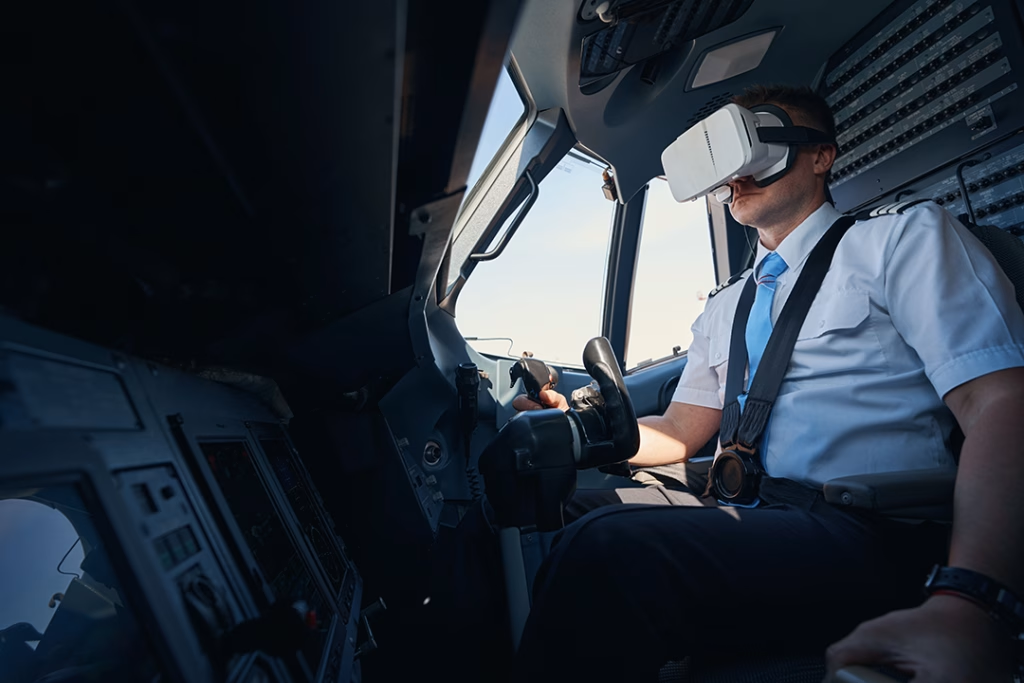
For example, aviation crews can simulate entire flight missions without downtime or fuel costs.

In the defence sector, operators can rehearse tactical manoeuvres in simulated combat environments, while freight or construction teams can gain hands-on experience inside cockpits before stepping on-board.

  • Best for:
    High-risk, high-complexity team training and development

  • Benefit:
    Repeatable, measurable, and fully controllable
Studies show that VR learners retain 75% more information compared to traditional training methods, completing tasks up to 4x faster.

Assc. For Talent Development

Augmented Reality: Smarter decisions in the moment

Unlike VR, which immerses users in a completely virtual world, augmented reality integrates useful data directly onto real-world environments through a tablet, smart phone or smart glasses.

It’s ideal for situations where field-based support is required without disrupting the ongoing task.

For instance, engineers can receive step-by-step repair instructions in real-time or construction workers can view underground utilities projected on the ground.

  • Best for:
    Maintenance, inspections, just-in-time support

  • Benefit:
    Real-time assistance with no need to leave the work environment

AR is proven to reduce error rates by up to 40% in field service operations.

HCL Tech

Mixed Reality: The best of both worlds

Combining the power of VR and AR, mixed reality blends real-world spaces with digital elements you don’t just see – like AR – but can also interact with and react to.

In real terms, it’s training in a physical space enhanced with virtual recreations of the environments, systems or objects teams will need to master.

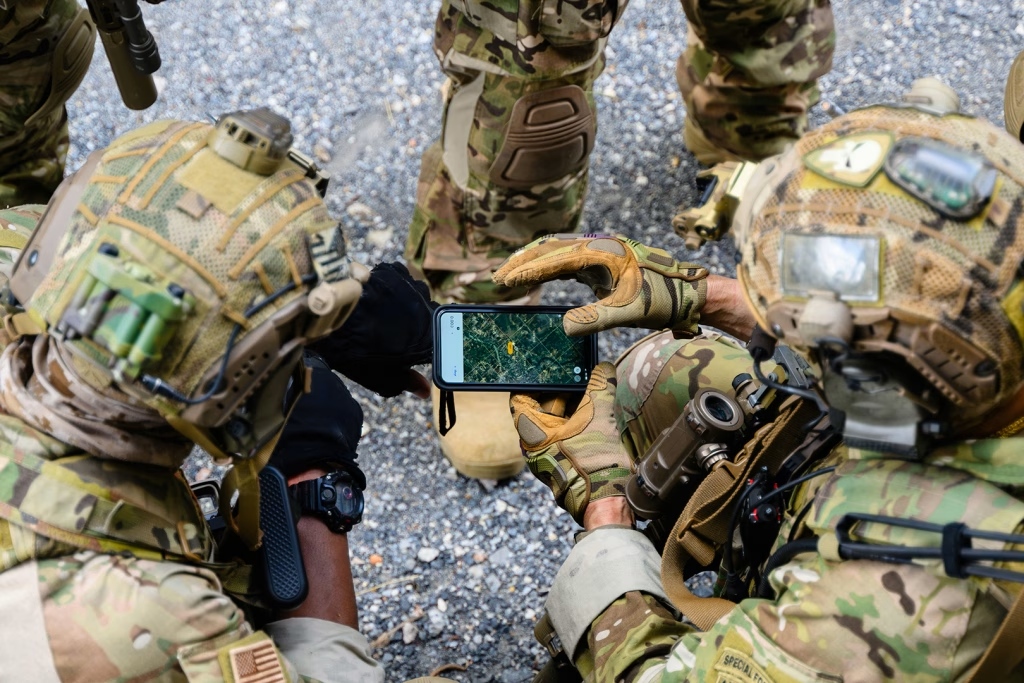
For example, defence teams can plan missions collaboratively using MR to overlay real-time updates and digital elements over a physical map.

Full scale simulators can also be used to replicate the real-world experience and give the user a truly hands-on, virtual experience.

In aviation, MR can blend cockpit layouts with virtual training scenarios, while construction teams can visualise building plans and detect clashes on-site before physical work begins.

  • Best for:
    Collaborative planning, physical-digital fusion

  • Benefit:
    Real-time, interactive overlays in real environments

Studies have shown that MR boosts team collaboration, leading to a 30% reduction in reworks in the construction sector, while providing greater efficiency and faster decision-making.

Travancore Analytics

So, which is right for you?

It depends on your goals, environment and the user’s role:

  • Choose VR:
    When safety, precision and repeatability are paramount, especially in high-risk environments

  • Choose AR:
    When you need to utilise real world systems in a digital environment

  • Choose MR:
    When you require collaboration, spatial awareness and interactive training in real-world environments

Still not sure which is best for your needs?

We can help you explore the best fit for your team.
Get in touch today!