Over the past decade, increasing numbers of high-performance teams have integrated immersive training into their development plans – and for good reason.
Rapid advancement in technology matched with sophisticated graphics and physics engines, have created a smarter, safer and more cost-effective way to prepare them for the demands of their real-world roles.
In this guide, we’ll break down what immersive training means, how virtual reality works in this context and how it’s being used to make skill development more purposeful.
Immersive training is more than a technological upgrade — it’s a strategic shift in how your teams learn.
Rather than separating knowledge from experience, it unifies the two. It gives teams the chance to rehearse real-world scenarios in simulated environments designed to feel and behave like the environments they’ll be operating in.
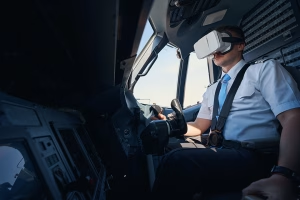
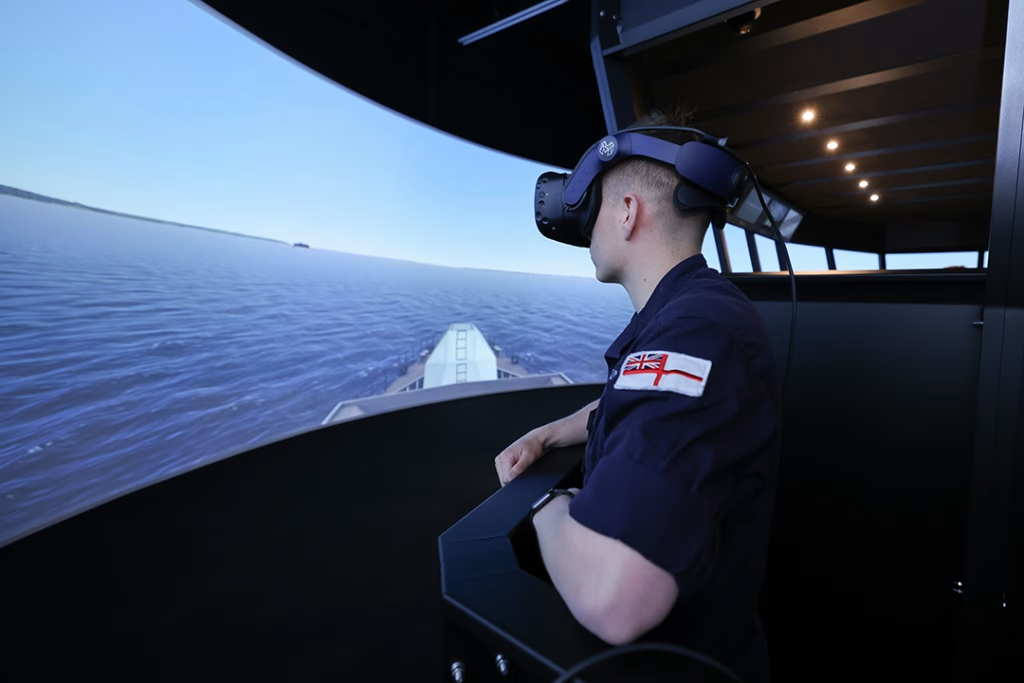
At the heart of most immersive training programmes is virtual reality (VR). Unlike watching a video or reading a manual, VR allows users to move, react and make decisions within an environment that replicates the visual, spatial and often physical conditions of a real scenario.
But immersive training isn’t limited to VR alone. It can also draw on augmented reality (AR) — which overlays digital elements onto the real world — and mixed reality (MR), where physical and digital objects interact in real time.
Depending on the training need, these technologies can be combined or used separately to create highly specific, controlled and repeatable learning environments.
The key principle, regardless of format, is presence — the sense of truly “being there.”
It’s what makes immersive training so effective at developing not just procedural know-how, but the deeper instincts and behaviours that define operational excellence.
To show how authentic immersive training can be, press play on this simulation of a VR flight through a recreation of Dubai Old Town.
Everything you see is accurate to the geography of the town. The buildings match, the streets are the same; each route an accurate recreation of the town’s real-world map.
But this isn’t just about how it looks, but how it feels.
The pilot is navigating an authentic flying experience. As the wind shifts, it affects stability. As the drone’s battery depletes, handling changes. The controls change. Decisions need to be made faster. Strategies need to adapt.
This isn’t a game. It’s what makes immersive training so effective: the stakes feel real, and the scenarios are designed to match what teams will face in the field.
No matter what industry, live development sessions come with compromise:
It’s expensive. It takes time to set up. It can be hard to simulate real-world conditions accurately. And most importantly, it’s risky.
Immersive training helps solve each of these.
The real value lies in authenticity — not just what’s on screen, but how everything responds.
Our solutions and environments aren’t just beautifully rendered locations. They simulate real-world physics, environmental factors and mechanical responses — so your team doesn’t just know what to do, they’ve done it before.
This is the future of learning: scenario-based, performance-driven, and deeply personalised.
Immersive training is already being used by:
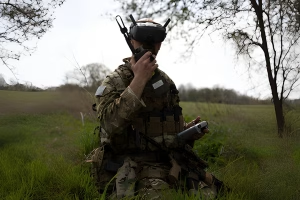
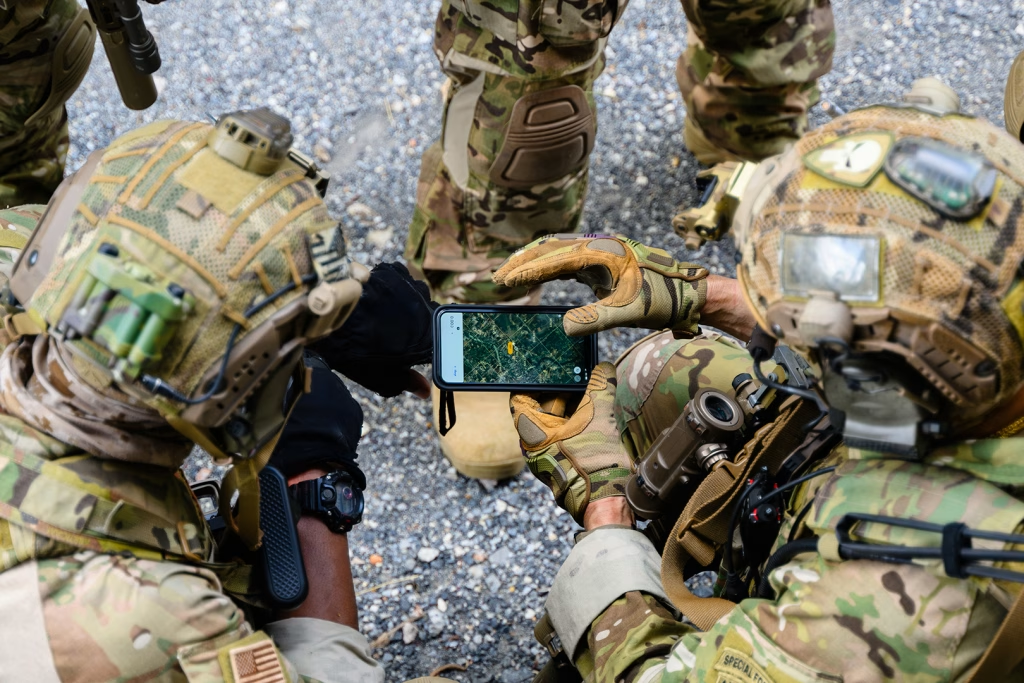
Military & Defence – for drone operation, battlefield simulation, equipment handling, and decision-making under stress.
Emergency Responders – for search and rescue drills, hazardous environments, and triage coordination.
Freight & Logistics – for route management, handling regulations, and situational awareness in complex spaces.
Our team are ready to create your perfect training environment.
Get in touch today!